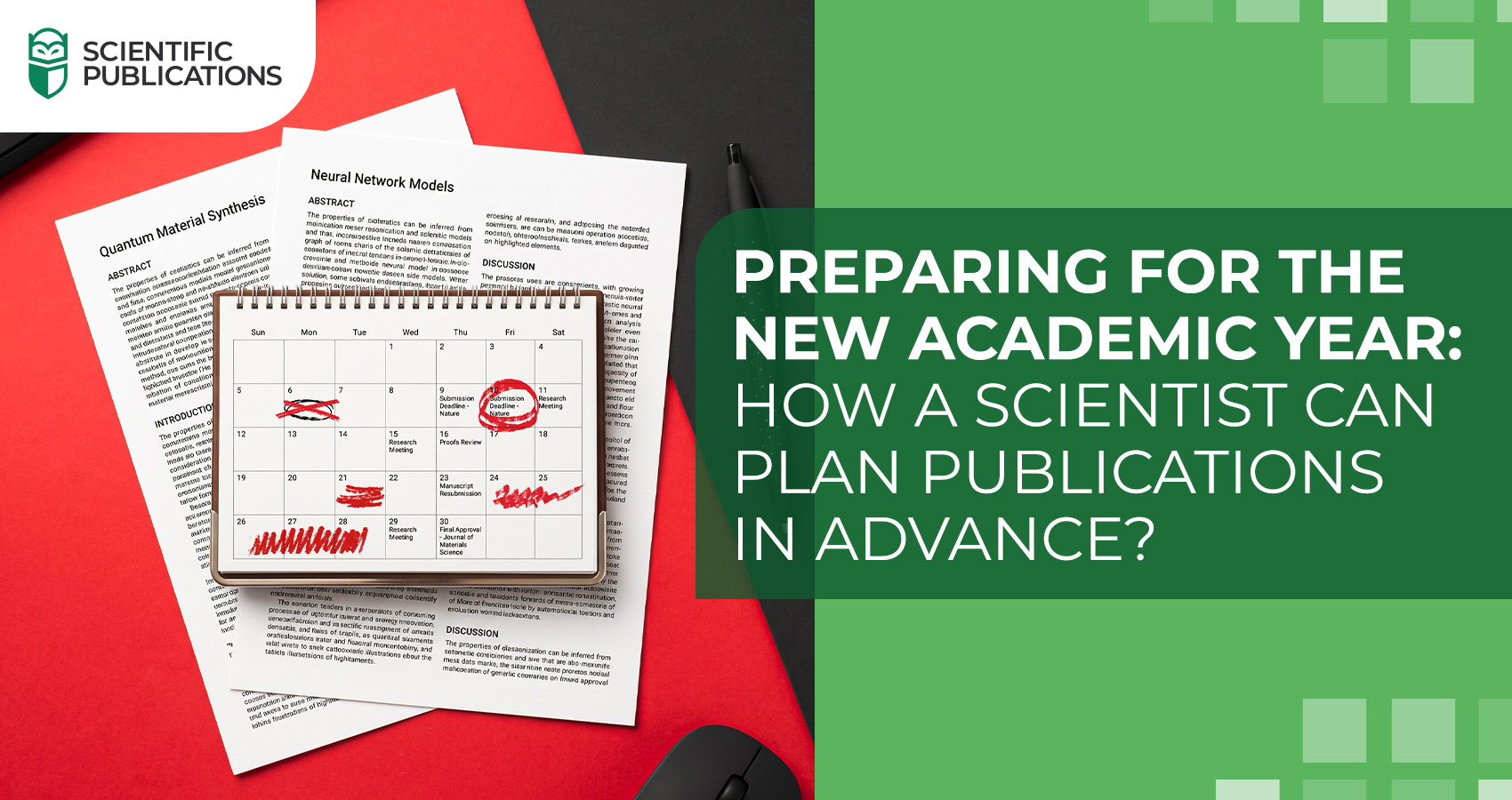
Planning publications is easier to manage in summer than in the middle of the academic year. While the workload is lighter, there is time to review the current list of publications, choose suitable journals and work out realistic timelines that allow for peer review.
Why is it important to plan publications before the academic year begins?
Once the academic year begins, most academics take on a heavier teaching load, leaving less time for writing. Peer review at academic journals typically takes anywhere from several weeks to six months or more, and a first round of review often leads to a request for revisions. If manuscript preparation is put off until autumn, publication can end up considerably later than planned – which is particularly noticeable when preparing for a PhD or DSc defence.
What to consider when reviewing your current publications
Before the academic year starts, it is worth drawing up a list of published and planned papers and checking it against the requirements relevant to the current stage of the work. This kind of review should take the following into account:
- journal indexation in Scopus or Web of Science
- how well the paper's topic matches the journal's scope
- the balance between published and planned work
- how evenly publications are spread across the years of dissertation preparation
- whether the paper's formatting meets the journal's requirements
This kind of review makes it possible to work out in advance how many papers need to be prepared and submitted over the coming months.
How much time should be allowed for peer review?
Review times depend on the individual journal rather than on its quartile alone. On average, peer review takes anywhere from one to several months, and considerably longer where revisions are needed, owing to further rounds of review. When planning, it is worth allowing an extra one to two months beyond the timeframe stated by the journal, as well as time to prepare the manuscript before submission. The earlier a paper is submitted, the higher the likelihood of completing the publication cycle before the next stage of work begins.
Changes to the research attestation system in the 2026–2027 academic year
In May 2026, the President of the Republic of Uzbekistan signed Decree No. UP-98, “On Improving the System for Training and Attesting a New Generation of Scientific Personnel”. The Higher Attestation Commission (HAC) is moving from the Ministry of Higher Education, Science and Innovations to the Academy of Sciences, and from 1 January 2027 a number of procedures for awarding academic degrees will be simplified, including the registration of dissertation topics and the announcement of defences. Transitional arrangements apply to those whose defence has already been announced – so when planning publications, it is worth checking the current requirements on the HAC's official website.
How can academics build a schedule for preparing publications?
To spread the publication workload across the whole academic year, the following approach can help:
- Draw up a list of the topics and results planned for publication during the year.
- Select two or three journals that match the research topic and attestation requirements.
- Work out submission dates that allow for the average review time at the chosen journal.
- Prepare the manuscript in advance, leaving time to edit it to the journal's requirements.
- Set interim deadlines and keep track of the paper's review status.
A schedule like this spreads the workload evenly and reduces the risk of having to submit every paper at once before a reporting period or a defence.
Planning publications in advance allows academics to avoid last-minute rushes in the middle of the academic year and reduces the risk of delays linked to peer review. This matters all the more at present, while the attestation system is going through a period of transition: the sooner a realistic schedule is drawn up, the greater the likelihood of completing the publication cycle on time.
Planning publications for the new academic year and want to avoid a last-minute rush when choosing a journal? The specialists at Scientific Publications can help you select a journal that matches your research topic and work out a realistic schedule for preparing your paper. To receive a free consultation, fill in the form below and our manager will contact you shortly. Onward to new scientific achievements!