


Alongside a large number of high-quality scientific journals, there are also unethical publications that are referred to in the academic environment as predatory. Such journals promise researchers rapid publication and also have low requirements for submitted materials. In practice, publication in such outlets can significantly harm a researcher’s reputation, and their work may fail to be indexed. What is a predatory publication? How can it be identified? The team of Scientific Publications has prepared advice that will help avoid publication in an unethical outlet.
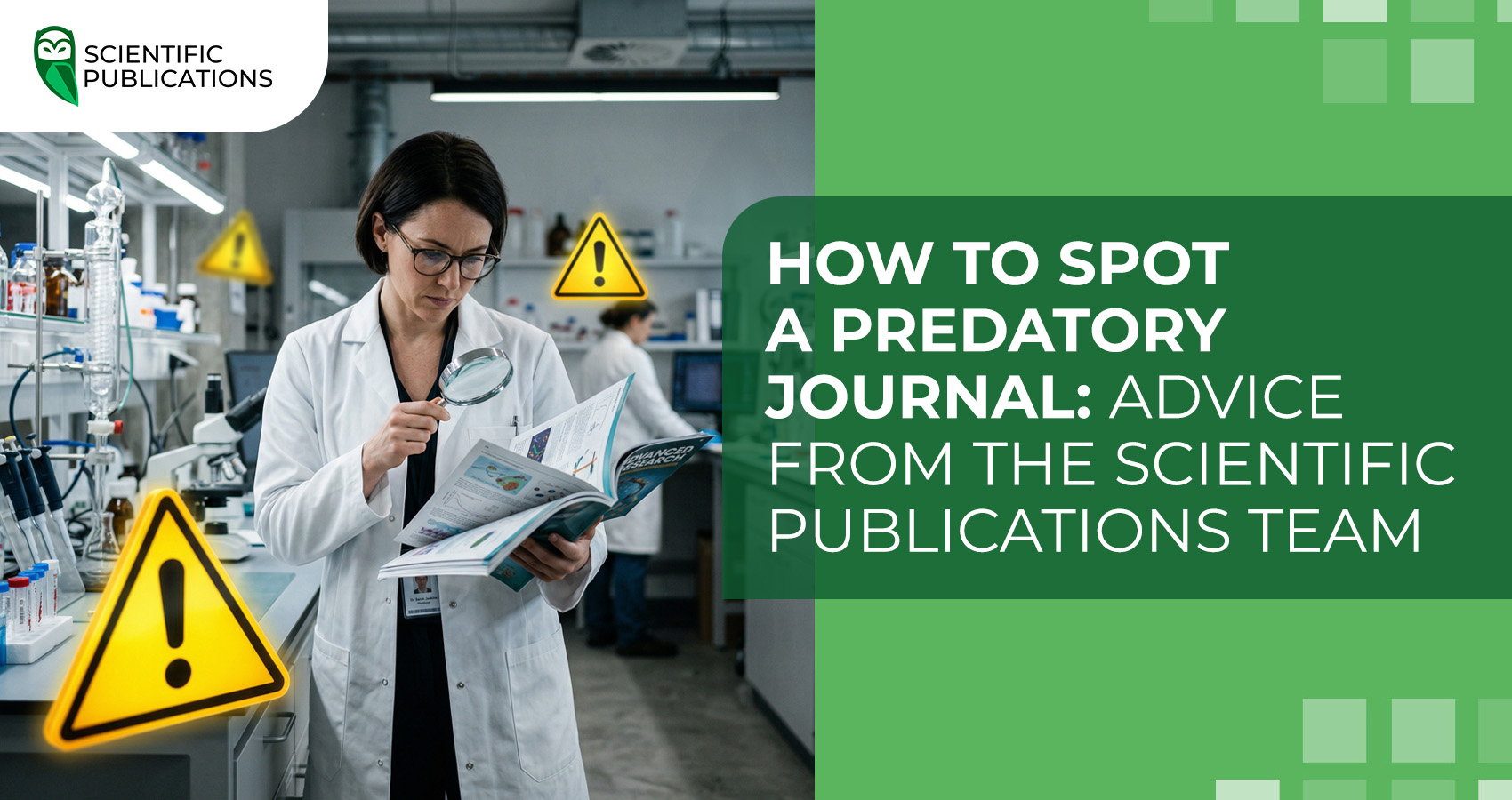
What are predatory journals?
Predatory journals are pseudo-scientific publications whose main purpose is financial gain through publications. However, such journals do not adhere to the principles of publication ethics and academic integrity. In most cases, they mislead young researchers who do not yet have experience communicating with the editorial offices of scientific publications.
Types of predatory journals
- Predatory journals. These are publications that previously had a good reputation and were indexed in prestigious databases, but later lost their status due to violations of the principles of academic integrity and ethical standards.
- Fake journals. Publications that present themselves as genuine by imitating publishing activity. Such journals indicate false scientometric indicators in order to attract researchers for the purpose of making a profit.
- Clone publications. Journals that copy the names, design, or websites of well-known publications in order to obtain money for article processing. At the same time, they either do not conduct peer review at all or carry it out only formally.
How to identify a predatory publication?
For some researchers, especially those who are only beginning their publishing activity, checking a journal for integrity may cause certain difficulties. We have selected key points that will help identify such a publication. Among them are the following:
- A rapid peer review process. If a journal promises publication within a short time frame, for example, several days or weeks, this is a clear sign of fraud. On average, peer review lasts up to 1 month in a standard peer-reviewed publication. In a prestigious scientific journal, for example, one indexed in the Scopus or Web of Science database, peer review lasts on average from 4 to 6 months or even longer.
- Aggressive publication policy. In most cases, this is manifested in emails from the journal’s editorial office calling for publication, which are sent to researchers by email and are a sign of the predatory nature of the publication.
- Unethical publishing activity. A journal may publish low-quality materials, delay issues, or fail to publish individual articles altogether. In addition, such issues often contain publications that do not correspond to the stated scope of the publication.
- Inflated or hidden article processing fee. Unethical publications may require an unjustifiably high publication fee or conceal the cost until the work has been accepted. In a reliable journal, information about the publication cost can be found on the official website.
- An excessively broad thematic scope. If a journal publishes articles from a significant number of fields of science, this may indicate its predatory nature and its aim to attract as many authors as possible rather than to contribute to the development of science.
- Lack of contact details. One of the signs of fraud is the placement of a contact form or email addresses on publicly accessible domains such as gmail.com and so on.
Before choosing a scientific journal, it is important to conduct a thorough check of it, even if you need publication as quickly as possible. The future success of the publication and the scientific reputation of the scholar depend on the correct choice of outlet.
Having difficulties choosing a scientific journal? To avoid publication in a predatory outlet, contact Scientific Publications. Our specialists will select a high-quality scientific journal and support your work through to successful publication and indexing. To learn more about our services, fill in the form below and our manager will contact you as soon as possible. Together towards a successful publication!


