Selecting a scientific journal based on its quartile is a crucial stage in the publication process. It determines the publication timeline, compliance with the requirements of a higher education institution or organisation, and the receipt of research funding. This process requires a careful and considered approach, yet some researchers struggle to find a suitable journal in Scopus or Web of Science. How can you check a journal’s quartile in Scopus and Web of Science? We will explore this in today’s article.
.jpg)
What is a journal quartile?
Quartile is a metric reflecting a publication’s position in the ranking of the best scientific journals within a specific subject area. This metric is determined based on citation metrics.
In the Scopus database, this metric is determined using the CiteScore indicator, whereas in Web of Science it is based on the JIF (Journal Impact Factor).
We discussed quartiles in Scopus and Web of Science, as well as their specific features, in more detail in our article.
How to find a journal’s quartile in Scopus?
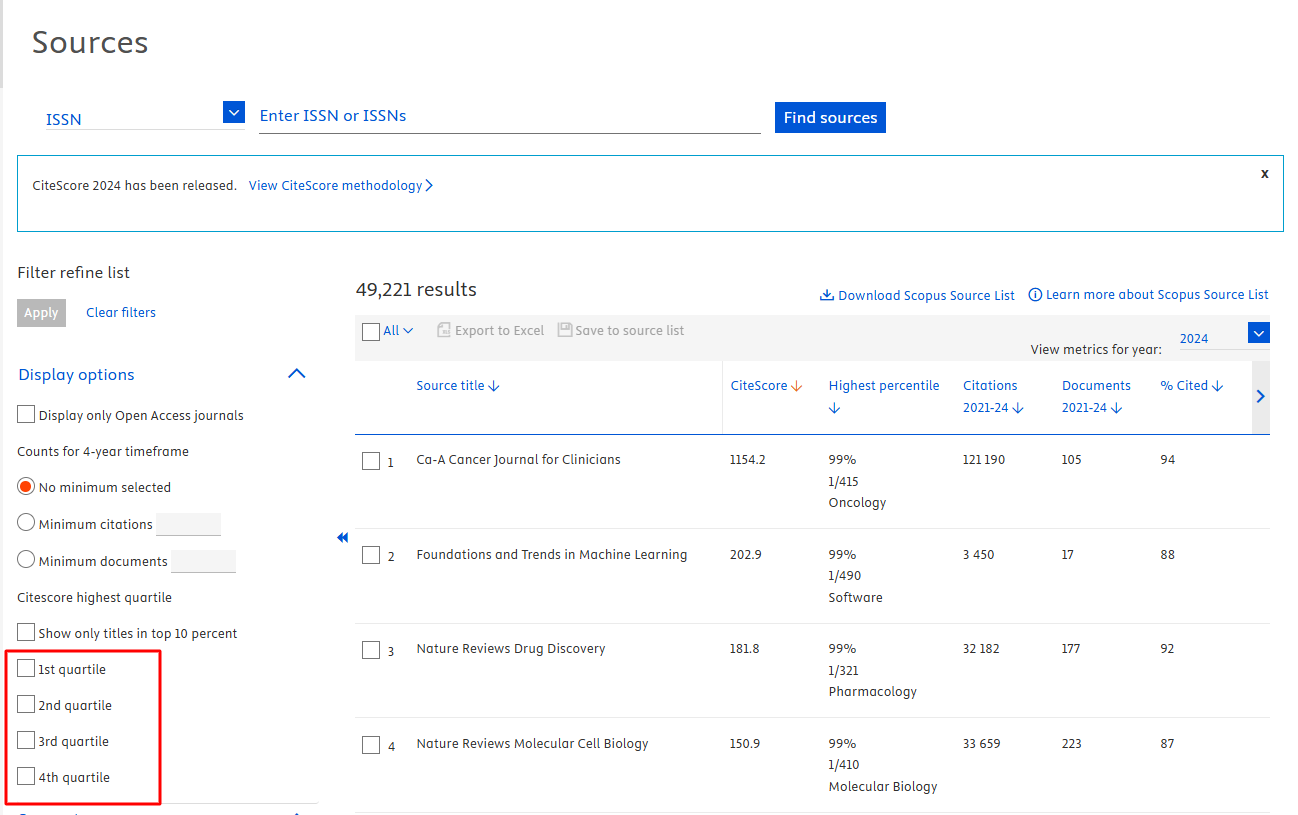
1. To begin with, you need to use the “Sources” function on the official Scopus website.
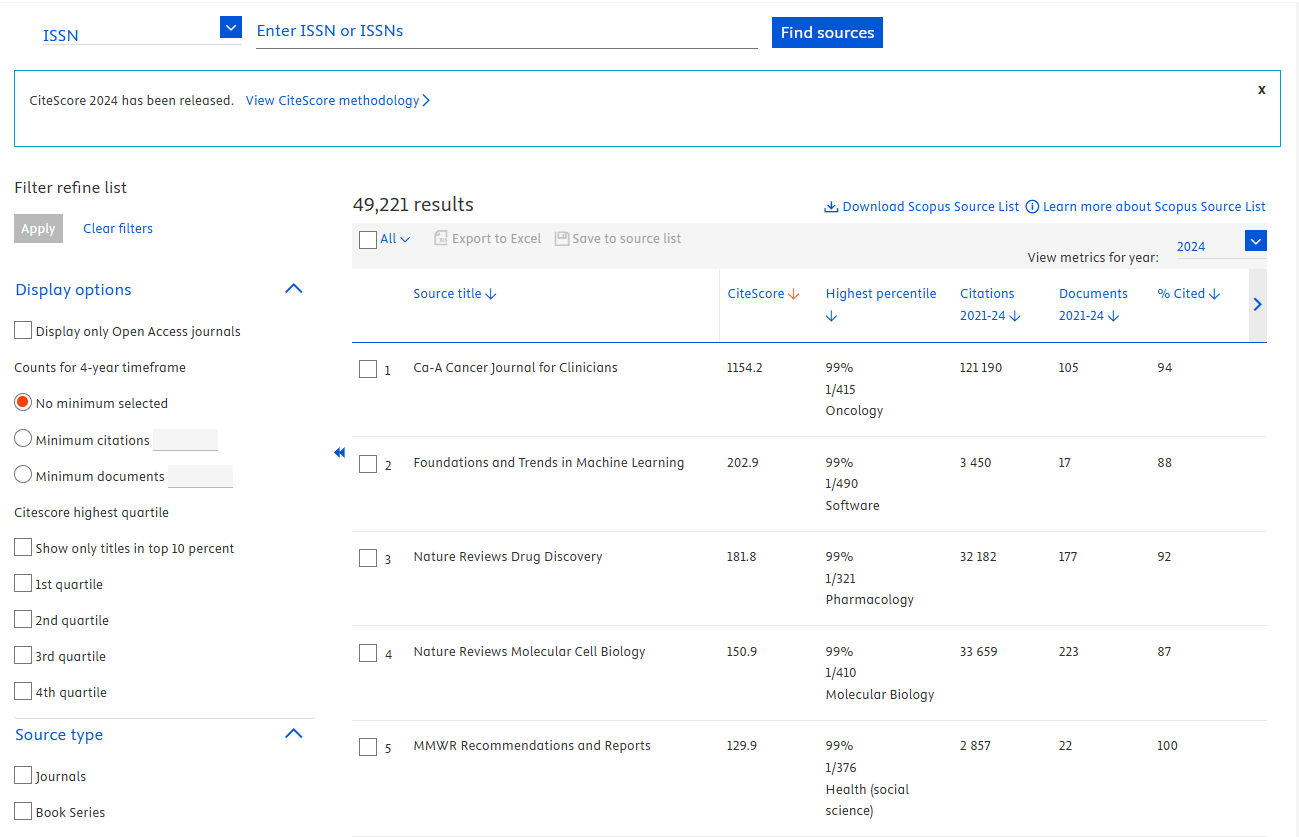
2. Set the necessary filters to search for a scientific journal, for example: research field, number of citations, quartile, etc.
Searching for a journal in SCImago Journal Rank
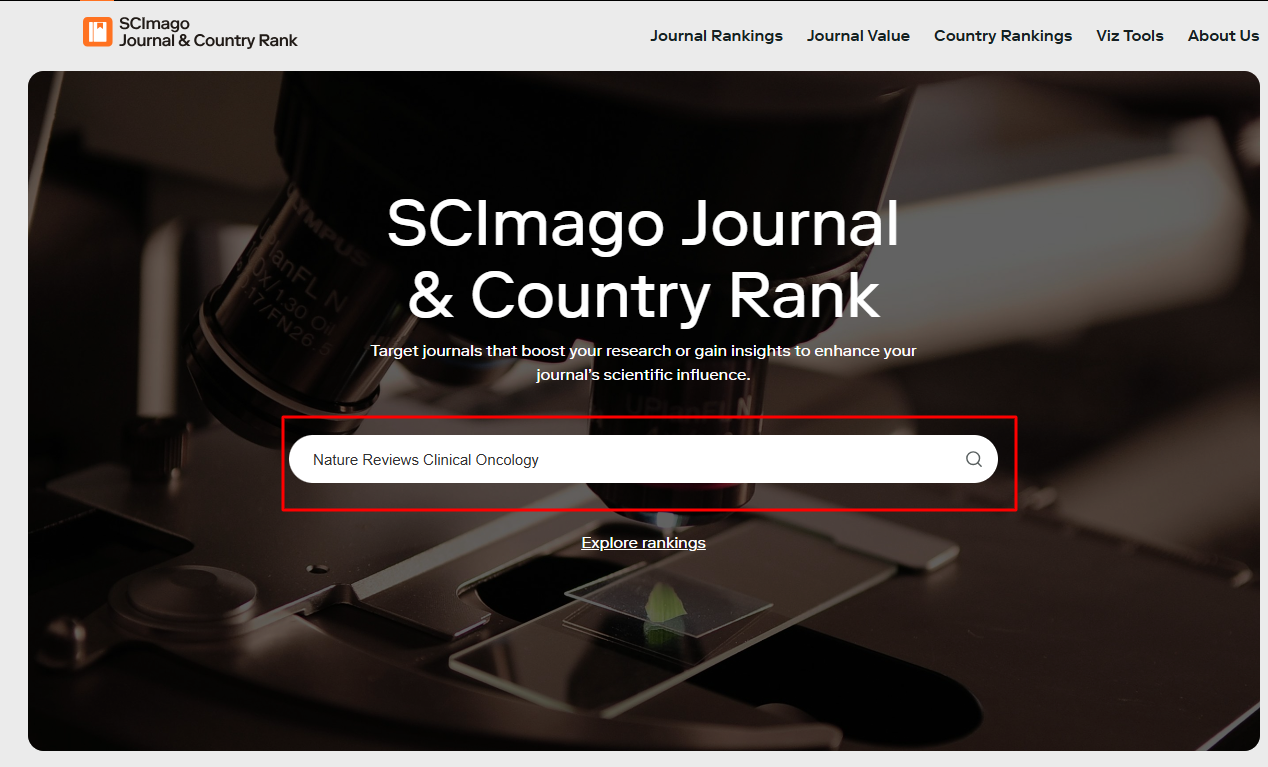
One of the simplest ways to search for a publication by quartile in Scopus is via the SCImago Journal Rank (SJR) platform.
1. On the official website, enter the journal title, ISSN or publisher name.
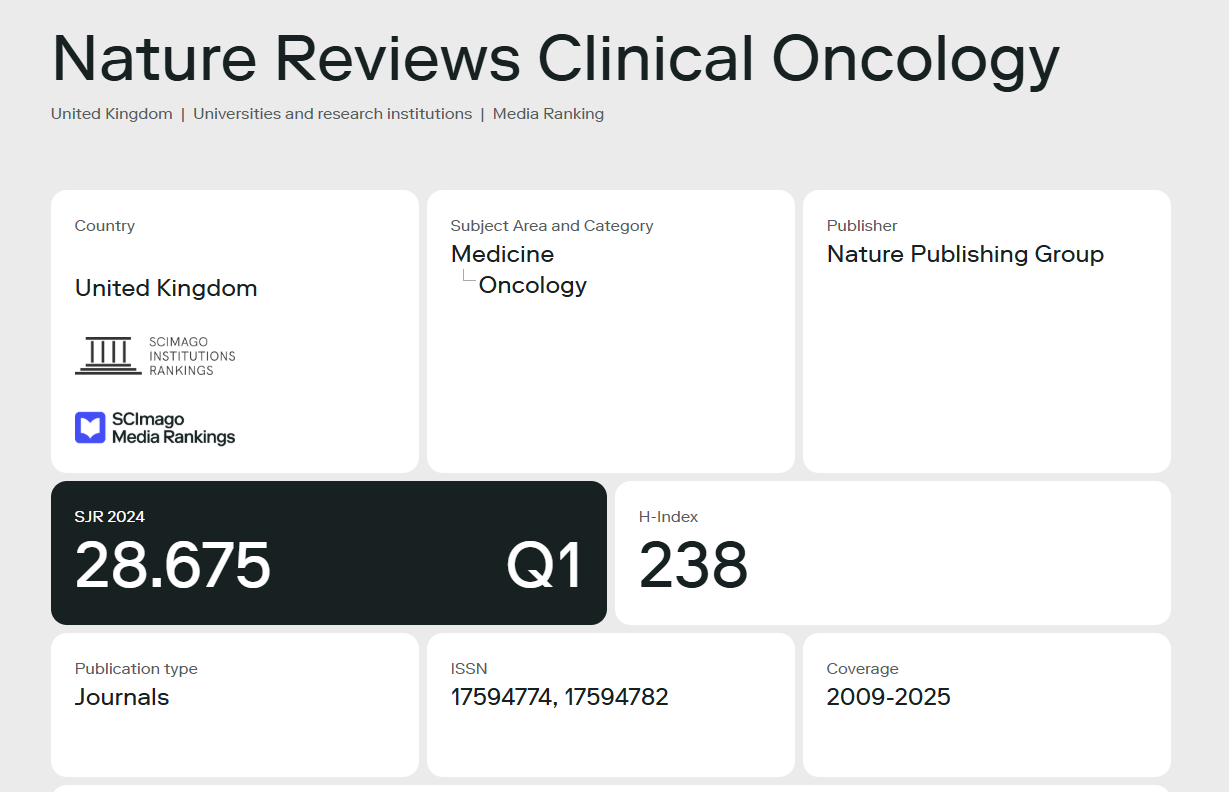
2. Go to the publication’s page and review its metrics.
3. Scroll down the page to find out more about changes in quartiles over time, as well as changes in citation rates.
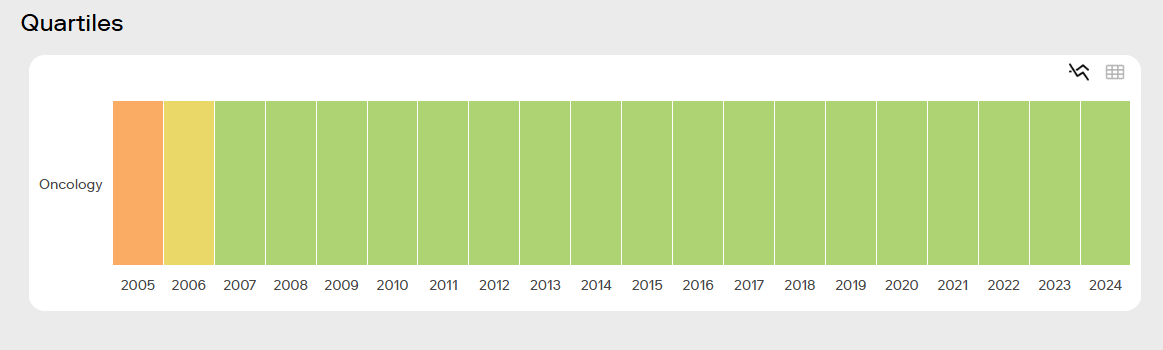
Please also note that quartiles in Scopus and SCImago Journal Rank may differ, due to the specific methods used to calculate quartiles on these platforms. When selecting a journal, you should take into account the requirements of your higher education institution, organisation, grant programme, etc.
How to check a journal’s quartile in Web of Science?
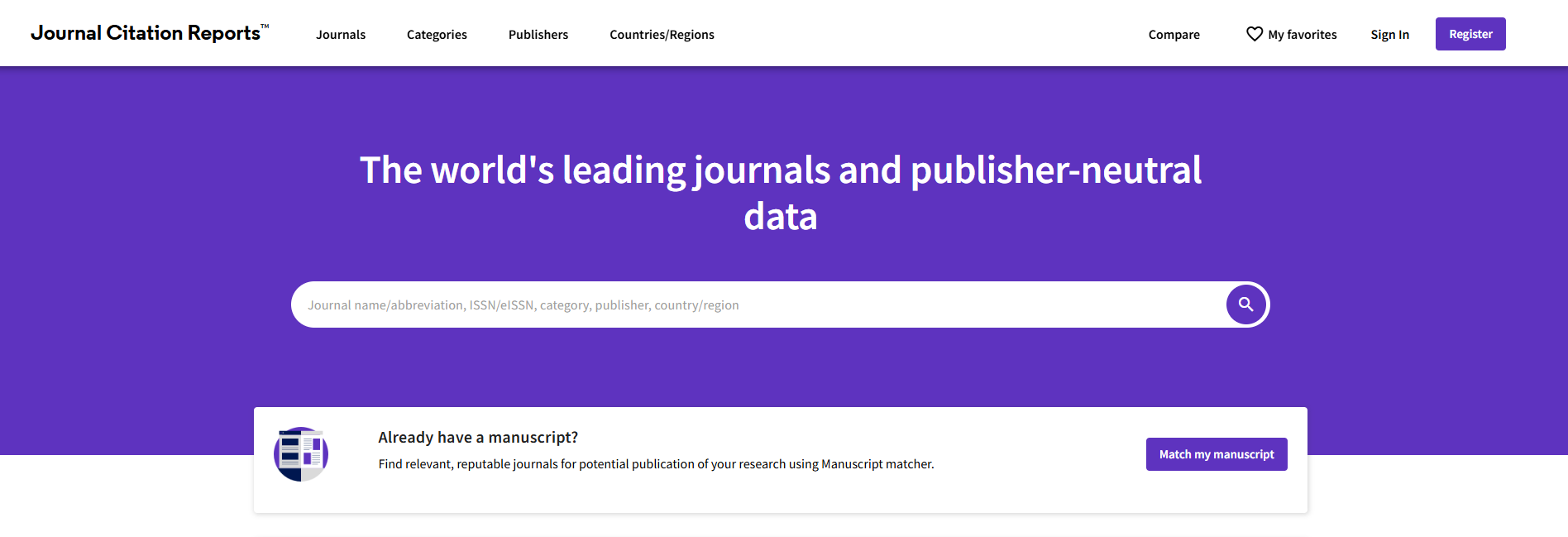
1. Before searching via the Journal Citation Reports (JCR) platform, you must log in using your institution’s account. Then enter the journal title, ISSN/e-ISSN, publisher, country or region, etc., in the search field.
2. You should then go to the “Rank“ page, where you will find more detailed information about the journal, including its quartile.
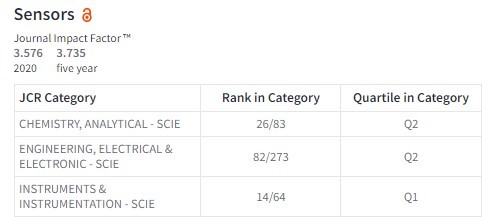
Please note that quartile values may vary depending on the database and the metrics used to calculate the quartile. We recommend referring to the official information on quartiles on the database pages rather than on the websites of scientific journals. This is because some publications may violate publication ethics. Such journals are referred to as predatory, clone publications or outright fraudulent ones, which provide false information about scientometric indicators.
To sum up, when choosing a scientific journal, it is important to carefully verify the information provided, as publication in a predatory journal can jeopardise a researcher’s career and reputation.
Need to publish a scientific article? Contact Scientific Publications. Our specialists will review your work and assist you in selecting a scientific journal from the Scopus or Web of Science databases. Do you have any questions? Fill in the form below, and our manager will contact you shortly. Together – towards a successful publication!